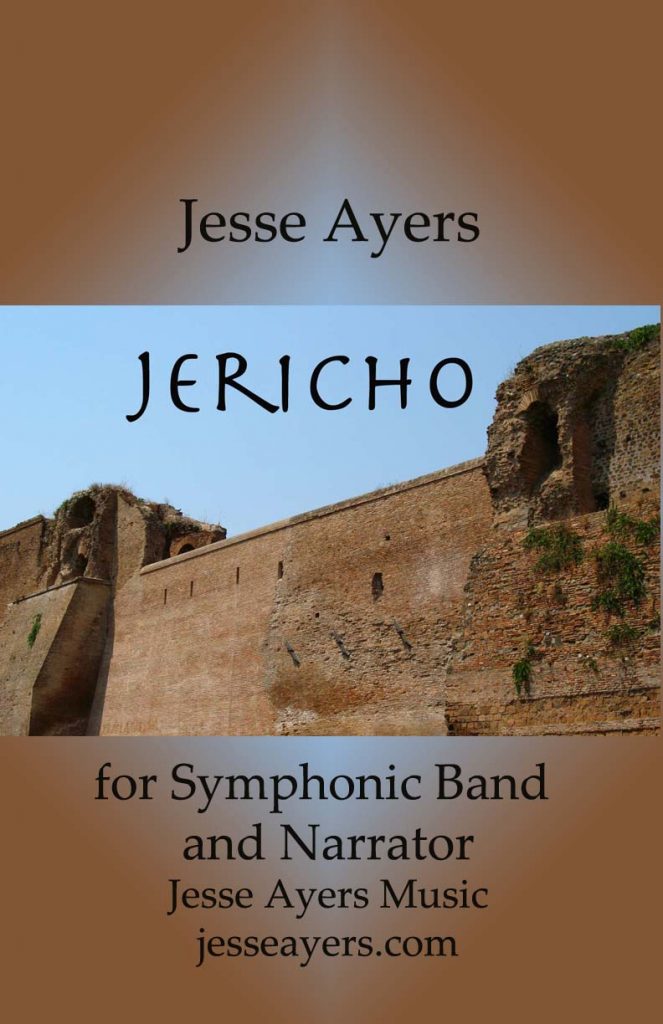
Jericho
Wind Orchestra / Symphonic Band. 16 minutes. Grade 5-6.
Surround-sound. Narration. Unorthodox audience participation.
$150 hardcopy $75 electronic delivery $30 score only Choral books $4@ /$2@ ORDER
"The most imaginative, unusual and successful work I have ever performed!"—Dr. Richard Fischer
It look's like you don't have Adobe Flash Player installed. Get it now.
click to hear excerpt
It look's like you don't have Adobe Flash Player installed. Get it now.
click to hear complete work
Professional Opinions

Richard Fischer, conductor
Jericho is by far the most imaginative, unusual and successful work I have ever performed in 33 years of conducting here at Concordia University. The students, myself, and the audiences had a very strong "positive" reaction to this magnificent work. We performed it ten times on our tour (Spring 2006) in the states of Illinois, Arkansas, Tennessee, Georgia, Alabama, Texas and at our home concert here in Chicago. This work was passionately received by our students and the audiences.
March 5, 2006
Last night [in Little Rock], almost the entire audience was in tears after Jericho. They were deeply touched. The host was so choked up she couldn't talk to the audience. She was speechless and crying in front of the entire audience.
March 12, 2006
We just played our final tour concert here in Austin, Texas. People could not stop talking about Jericho after the concert. The people were very moved by it. Jesse, what a piece! Thank you! What a pleasure getting to know you. It has been an honor to play it and see what the impact has been on audiences.

Dr. Jeffrey Scott Doebler, conductor
Past President, Indiana Music Educators Association
It was a great honor to premiere this work in the spring of 2005. The fresh techniques--especially surround-sound percussion, audience singing and shouting, and narration--make this work a unique and moving experience for the audience. Whether one is moved by the religious message of the work, or simply focuses on the absolute music, it is an extremely exciting composition.

William Vollinger, composer
Jericho is to me extraordinary. Full of energy, directness, an accessible kind of artistry and a very definite anointing, it made me cry and shout as I listened to it (and I'm a Lutheran). I don't know about you, but I like seeing the walls come down in my spiritual life. This piece evokes this process remarkably, with a very Christian perspective. And if I might dare to add (and I am NOT trying to be political here) in a milieu that prefers only to evoke anti-war messages, sometimes not very well done, this work dares to actually evoke war. But this war is a spiritual war, a war the Bible tells us we are all in, whether we like it or not.
Audience participation
There is extensive audience participation, including not only unison singing, but also battle chants and a great battle shout at the work's climax. Although one might think that a concert audience will be reluctant to participate in this shout, in all performances thus far, their participation has been enthusiastic. There are explanatory instructions for the audience in the program notes, and the score contains a script to be read to the audience prior to the performance.
Surround-sound
Some of the musicians begin the work in their surround-sound positions while others begin on stage and move later in the piece. The eventual placement of the forces is:
1. Six percussion stations surround the audience: left and right front, left and right middle, and left and right rear. These are not elaborate set-ups; each has a bass drum or large tom-tom, a suspended cymbal, and one tubular chime removed from the rack. (A total of six chime mallets will be needed.) The parts have been engineered so that two, and perhaps even four, of the six parts can be played by non-percussionists if necessary. (2 parts are hard, 2 are moderate, and 2 are easy).
2. Two trumpets are in the right and left rear corners of the hall, on the balcony available. They play a number of offstage fanfare figures which are answered by the four trumpets onstage.
3. The horn section begins onstage, but eventually moves to surround the audience: one on the left, one of the right, and two in unison in the rear. This is for the sounding of the seven ram's horns (Joshua 6:4). The other four ram's horns are the two offstage trumpets in the two rear corners and two trombones which move to the two front corners of the stage.
4. There is an optional offstage woodwind choir behind the audience to create a directional swirl of sound in the last section of the piece.
Program notes
Jericho is a surround-sound piece employing expanded instrumentation, multiple antiphonal effects, narration, and extensive and unorthodox audience participation. It is based on the Biblical account of the Battle of Jericho (Joshua 6), in which the famed walls of Jericho fell down flat. The work was composed over a 17-month period from October 2003 - February 2005, and was premiered April 22, 2005, by the Valparaiso University Chamber Concert Band under the direction of Dr. Jeffrey Scott Doebler. The score carries the dedication "to Ted, from whom I learned about risk taking and breakthrough." The composer thanks the administration of Malone University for their generous support of this project by the granting of a sabbatical leave the fall of 2004. This project is also funded in part by a Copying Assistance Grant from the American Music Center.
Compositionally, Jericho makes extensive use of the 15th-century melody "Veni Emmanuel" ("O come, O come, Emmanuel"). It is used to generate motivic ideas, such as the horn and trumpet fanfare figures; it appears as a cantus firmus in the synth bass in the long pedal tones; a three-voice, fifth species harmonization of Veni is used to generate harmonic cycles; and finally it is quoted directly in the last section of the piece as the audience sings the phrase "O Come, O Come, Emmanuel."
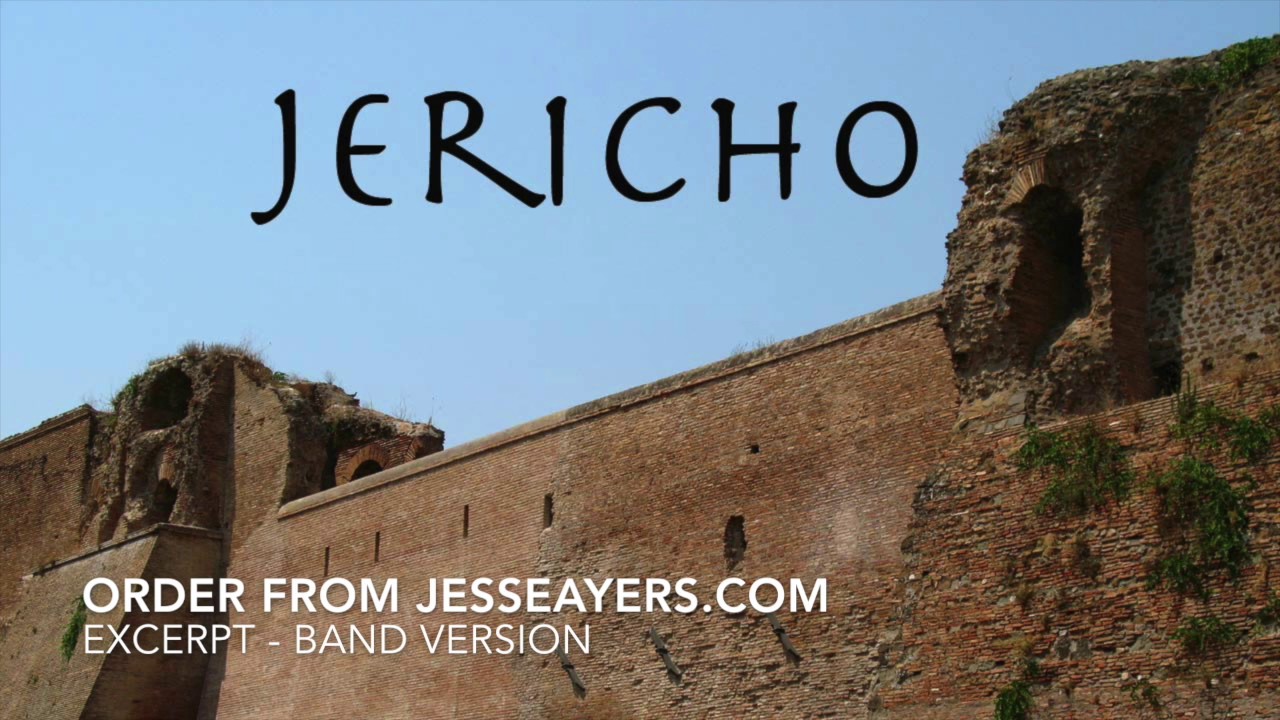
Several archeological excavations at Jericho (1909, 1957, 1997) have discovered that the mound, or 'tell' of Jericho was surrounded by a great earthen rampart, or embankment, with a stone retaining wall at its base. The retaining wall was some 12-15 feet high. On top of that was a mudbrick wall six feet thick and about 20-26 feet high, or 32-41 feet above ground level. This embankment behind the wall sloped upward to the a third wall surrounding the inner city, whose base was base was some 45 feet above the ground level outside the city and may have been another 12-20 feet high. This is what loomed 60-85 feet above the Israelites as they marched around the city each day for seven days. Excavations in different locations have found the same phenomenon: piles of bricks from the collapsed outer wall formed a ramp against the retaining wall so that the Israelites could merely run up. ("The people went up into the city, every man straight ahead." Joshua 6: 20) But there is more. The German excavation of 1907-1909 found that a short stretch of the outer wall on the north side did not collapse, but was still standing [some 3300 years later!], and that there were houses built against this section of wall. It is quite possible that this is was the location Rahab's house. (Joshua 2: 15). The Biblical account states that Rahab was spared because she hid Joshua's spies and helped them escape. The timing of the probable earthquake that felled the wall, coming as it did on the heels of the seventh march, the blast of the seven ram's horns, and the shout, would seem miraculous enough, but this was apparently a selective earthquake that left the favored house standing.
Instrumentation
Flutes 1-5 (1st doubles optional bass flute, 2nd doubles piccolo, 5th doubles alto flute)
Oboes 1-2
English Horn (exposed parts cross-cued)
Bb Clarinets 1-6 (12-18 players)
Bb Bass Clarinet
Eb Contra Alto Clarinet (optional part)
Bb Contra Bass Clarinet
Bassoon (1)
Contrabassoon
Bb Soprano Saxophone
Eb Alto Saxophone
Bb Tenor Saxophone
Eb Baritone Saxophone
Bb Trumpets 1-2 (offstage)
Bb Trumpets 3-4-5-6 (onstage)
F Horns 1-2-3-4
Trombones 1-2-3
Bass Trombone
Euphonium
Tuba
Electronic Keyboard 1 (not optional)
2-hand part requiring a bona fide keyboard player, or with less skilled players, one person can use both hands to play the right hand part and a second person can use both hands to play the left hand part.
Electronic Keyboard 2 (not optional)
very important synth bass pad, but an easy 1-hand part
Harp (optional, part is cued in Keyboard 1)
Piano
(If only one bona fide keyboard player is available, Keyboard 1 is more important). There is an "inside-the-piano" effect at bar 234 which can easily be covered by a non-keyboardist.
Percussion 1-6
Parts 3 and 6 are more difficult
Parts 1 and 4 are moderate
Parts 2 and 5 are easy
SATB Chorus (optional, but adds much)

Offstage woodwind choir (behind the audience)
Flutes 1-2-3
Bb Clarinets 1-2-3
The saxophones leave the stage late in the piece to join the offstage woodwinds.
(These are easy parts, players from a "second" band or local high school may be used)
(A 3rd electronic keyboard may be substituted for the extra woodwinds if need be, or used to augment their sound.)
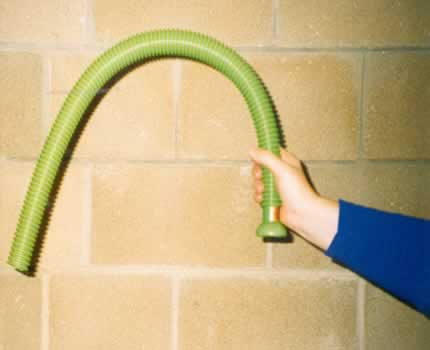
The offstage woodwind players also twirl whistling tubes.
Past Performances
Friday, May 7, 2010, Milwaukee, Wisconsin

Jericho
Wisconsin Lutheran College Concert Band
Terry Treuden, conducting
Schwan Concert Hall
8:00 p.m. local time
March 2006, Southern U.S. tour

Jericho for surround-sound wind orchestra and narrator
The Wind Symphony of Concordia University Chicago
Dr. Richard Fischer, conducting
Jonathan Meyer, narrating
St. Louis, MO; Little Rock, AR; Memphis, TN; Peachtree City, GA; Pensacola, FL; Mobile, AL; Houston, TX; Austin, TX; Chicago, IL
April 2005, Valparaiso, IN

Jericho
for wind orchestra and narrator
World Premiere
Valparaiso University Chamber Concert Band
Dr. Jeffrey Scott Doebler, conducting